Keeping Paul O’Hanlon’s Dream of Ballots for Patients Alive
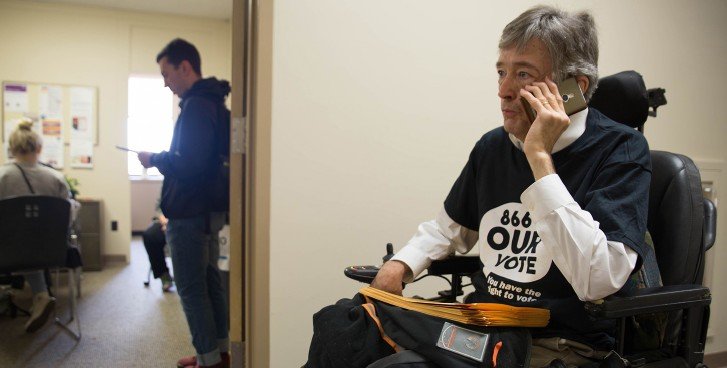
Paul O’Hanlon was a fierce advocate for voting rights, especially for disabled people.
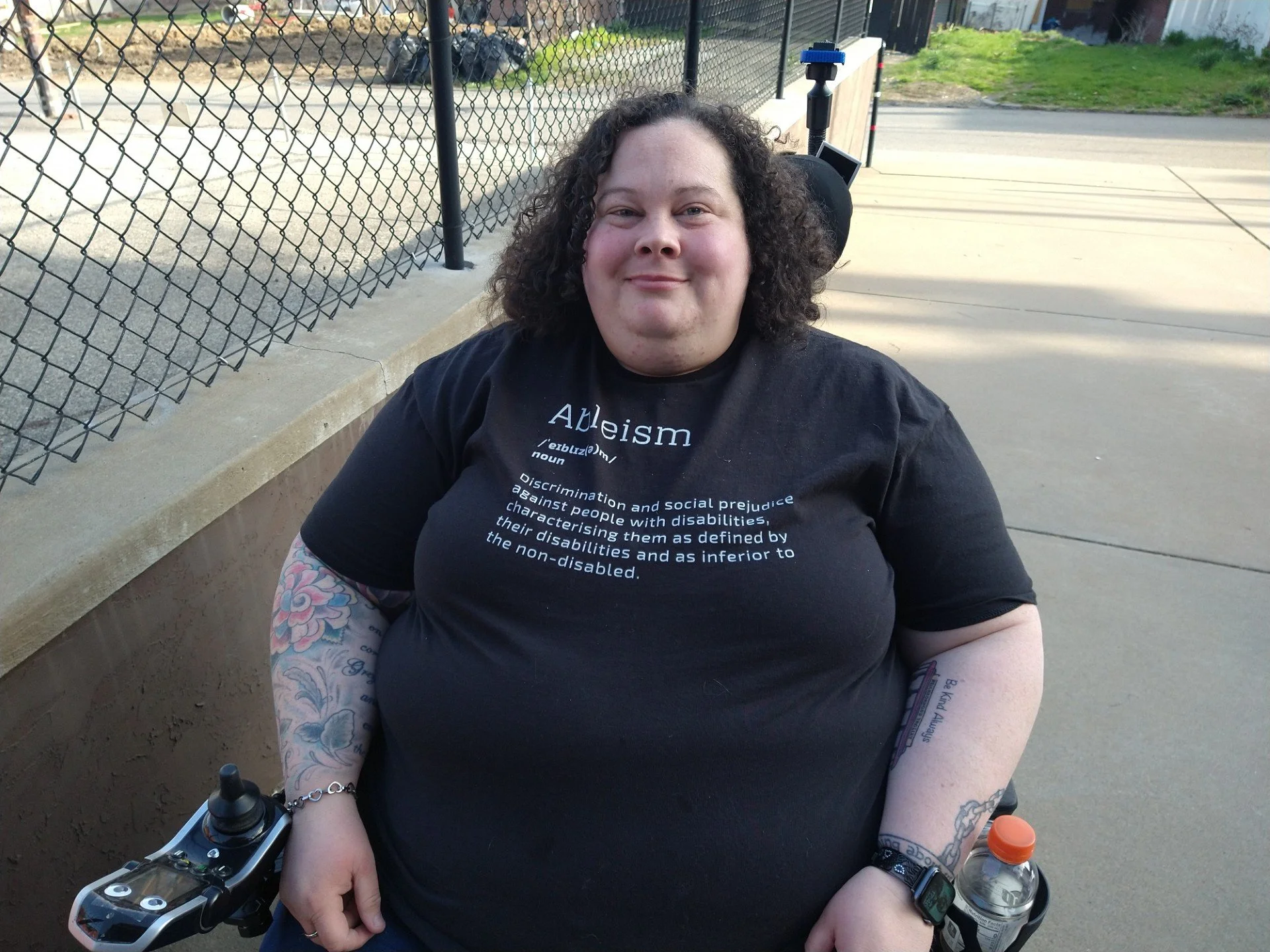
Paul O'Hanlon, a Pittsburgh attorney and fierce disability rights advocate, died on Nov. 30, 2025, at age 71. Over his 35-year legal career, he fought relentlessly for accessible housing, transit, healthcare, and voting rights—changing countless lives in Pittsburgh and beyond. This was Alisa Grishman's eulogy at his memorial service. Alisa is the founder and director of Access Mob Pittsburgh.
Picture this. The year is 2016. A very important election is coming up. Everyone is rolling their eyes and laughing at the idea that some second-rate reality star could become the next President of the United State. …
In 2016 I was still trying to get around with my walker, though getting closer and closer to needing a wheelchair. I had been involved with this new-found thing called “disability advocacy” for a whole entire year. I felt like I’d already reached the pinnacle of my life by being mentioned by the Post-Gazette for starting this little tiny group called Access Mob Pittsburgh, when one day Paul O’Hanlon came up to me after a City-County Task Force on Disabilities meeting and said “Hey, would you like to work with me on a project?”
And I was like, “OMG! Here’s this pillar of the disability community who I’ve placed on a giant pedestal and he’s asking me for my help!” And with no questions asked, I said “Sure!”
What ensued from there was a 10-year partnership doing one of the most fulfilling, amazing, wonderful things in my life.
Ballots for Patients
Ballots for Patients had its inception in 2004 when Paul worked for an election protection hotline. Being a lawyer, he was a valuable commodity doing this work, but as he described it to me, his biggest surprise was in how many calls were coming in from hospitalized people who wanted to find a way to vote. He also heard about a woman who used a wheelchair who arrived at her polling location only to find that there were stairs. After calling around and searching through voter laws for days, he discovered that there was no way for someone to get an absentee ballot after the regular deadline.
So Paul did what Paul was wont to do, and he filed a complaint with the Pennsylvania Secretary of State. And while no one can say for sure that it was specifically Paul’s complaint that led to State Legislature passing laws in 2006 creating an emergency absentee ballot … I choose to believe.
Over the next couple of elections Paul developed a program that he called Ballots for Patients. Working with several UPMC hospitals, Paul would have volunteers collect ballot applications and have them signed by notaries. Then designated drivers would take the applications to the courthouse, get ballots printed, and take them back to the hospitals. Volunteers would bring patients their ballots, get them filled out, and drivers would bring them back to the courthouse.
As you can imagine, this was a LOT of work, and that’s why Paul brought me in to help in 2016. My role was to be in charge of all of the volunteers, including recruiting what wound up being around 70 people working across nine hospitals. We recruited so close to last minute that I wound up sitting outside a Hillary Clinton rally at Heinz Field for six hours holding a giant sign saying “Ballots for Patients! Volunteers Needed!”
I was already excited on November 8, because this was the first time I had ever been in charge of something that felt so important. I’d written up a press release about our effort, and we had several news outlets send journalists to Magee Women’s Hospital to do stories on new mothers voting from their hospital rooms.
Hospitals are the Great Equalizers
I was fielding phone calls from various volunteers, back-and-forthing with Paul about legal challenges being made to ballot applications, up to my eyeballs in stuff going wrong … and then a volunteer walked into our home base in Shadyside hospital crying her eyes out. I asked her what had happened and she told me that when a patient in the cancer ward had found out he could vote he’d started sobbing because he didn’t think he’d be able to participate in his final election.
That hit me so hard. I cannot express to you how meaningful that was.
When I told Paul about my experience after the election, I found out that this was not a unique story. He told me all about how important it was to get every last vote from every last person, including disabled people – especially disabled people.
Paul pointed out that the hospital was such a great equalizer, because there were so many people there who were ordinarily healthy and able-bodied suddenly finding themselves completely disabled. He loved so much how positions were flipped, where normally it’s abled people helping those who are disabled, but with Ballots for Patients it was a couple of cripples providing all the help.
Over the next 10 years Ballots for Patients became a well-oiled machine. I developed what I called my “color-coded spreadsheet of doom.” We added Western Psych to our list of hospitals that we served. We developed a relationship with UPMC’s legal department that allowed us to utilize the system’s own internal volunteer department. As of 2024 we were able to get several volunteers who drove applications back and forth to Westmoreland, Washington, Butler, and Beaver counties. It was amazing. We were amazing.
There’s so much more we wanted to do. We wanted to get more health systems, especially Allegheny Health Network, involved in Ballots for Patients. We were working on ways to get volunteers into nursing and personal care homes, something that Mallory Hudson is working on right now through Keystone Progress.
We wanted the world.
Keeping Paul’s Dream Alive
The last time I saw Paul in the hospital, I promised him that I would keep Ballots for Patients alive. To that end, my non-profit, Access Mob Pittsburgh, is taking up the reins.
I’ve done some pretty cool shit in my life. I’ve been arrested seven times fighting for disability rights. The last time I was in Harrisburg the lieutenant governor saw me and said, “Oh hey, Alisa!” Sen. Bob Casey personally invited me to serve on several advisory panels. I’ve got a feature article about my work in Huffpost, and I’ve been quoted in the New York Times. I’m on the cover of a freaking book.
And I never would have done any of that were it not for Paul O’Hanlon. He was my mentor. He was my co-conspirator. And he was my friend. Thank you, Paul, for everything.