

Pittsburgh Regional Transit Offers On-Demand ASL, But Philly's SEPTA Won't
On January 20, 2026, Pittsburgh Regional Transit became the first public transit system in the country to offer both on-demand visual and ASL interpreting services. Deaf and hard-of-hearing riders can now tap an app and connect instantly with a live American Sign Language interpreter 24/7. There's no scheduling required, and it's completely free.
"By teaming up with Aira and embracing this innovative technology, we're making it easier than ever for riders of all abilities to travel confidently and reach the destinations that matter most," said PRT CEO Katharine Kelleman in the announcement.
“Aira is proud to partner with PRT as they expand their on-demand interpreting offerings,” said Henri Grau, Director of Deaf Community Engagement at Aira. “The addition of Aira ASL at PRT means Deaf and hard of hearing riders can count on smoother communication, improved experiences, and access to information whenever the need arises.”
"That is wonderful, I am so glad. Thank you so much, Pittsburgh Regional Transit," wrote Richard Cook Gaffney III in response to Trib Live’s news coverage of the launch.
In Philadelphia, Deaf and hard-of-hearing SEPTA riders still communicate with transit staff by writing notes back and forth. The agency says it can't afford "IT enhancements," though advocates have been requesting video remote interpreting since 2022.
"We're wanting the video remote interpreting set up there, so that if the people there are speaking, the Deaf individual can understand without having to write back and forth," Liberty Resources’ Igor Khmil told Grid. He's asked SEPTA to implement VRI since 2022. Despite promising talks early on, nothing has changed.
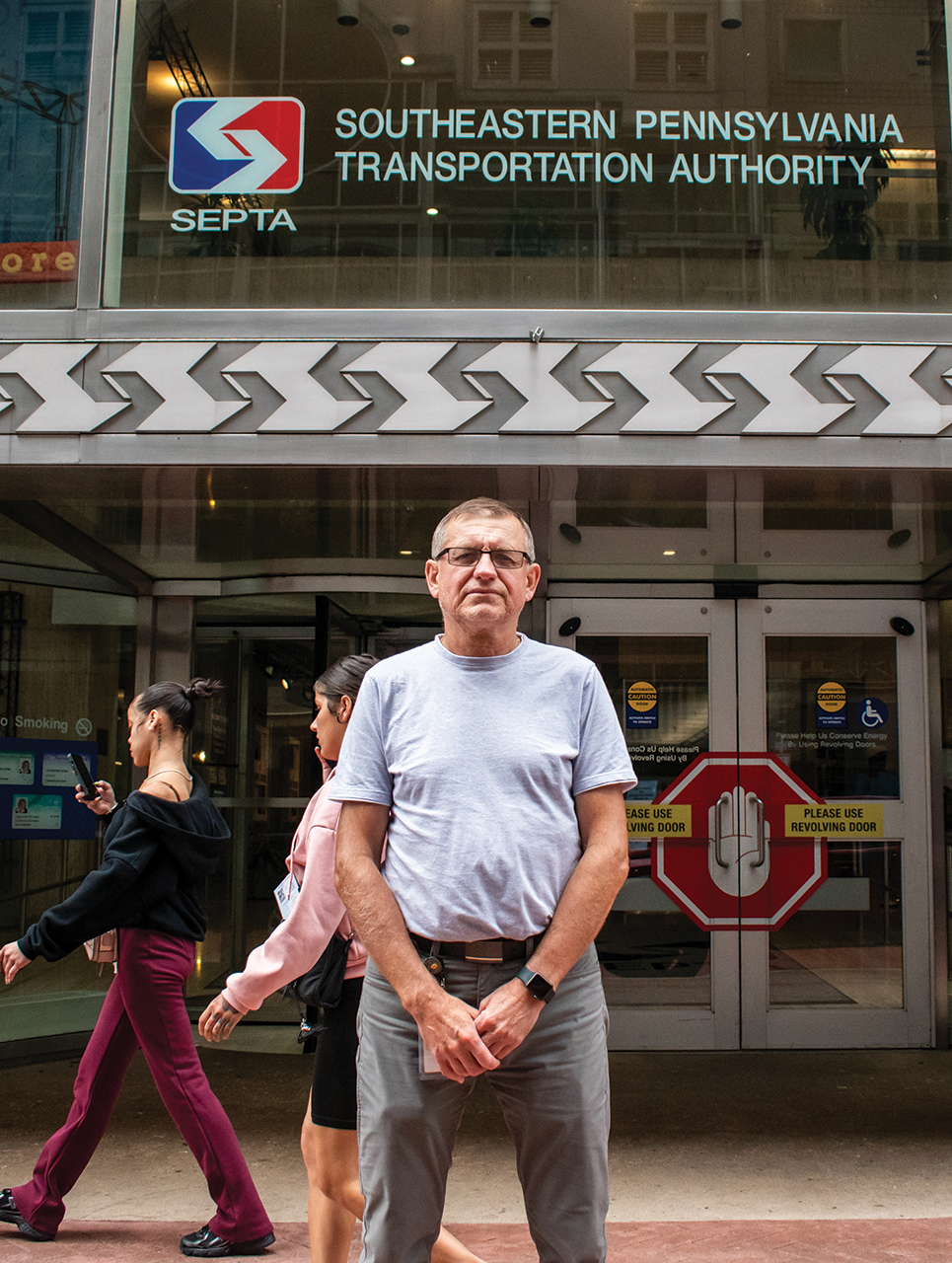
Igor Khmil stands outside SEPTA.
The Numbers Don't Lie
It's not like Pittsburgh's transit system is thriving while SEPTA struggles. Both transit systems are drowning in debt, faced massive service cuts in 2025 and had to raid capital funds meant for infrastructure just to keep buses running.
PRT stared down a $100 million deficit and 35% service cuts. SEPTA faced a $213 million shortfall and implemented 20% service reductions before public outcry forced a reversal. SEPTA's $2.6 billion budget is more than four times the size of PRT's $630 million.
Both transit systems were in the middle of a financial crisis. So how did Pittsburgh manage to launch a cutting-edge accessibility service while Philadelphia told its Deaf residents that the agency's "funding crisis has halted any IT enhancements regarding the implementation of new technologies"?
Pittsburgh Moves Forward While Philly Makes Excuses
The technology exists, and the cost is negligible compared to SEPTA's operating budget. Pittsburgh can do it. Why can't Philly? SEPTA can't say it's because Pittsburgh has a more manageable, smaller system, since even New York City's MTA launched a pilot program in early 2025 using QR codes that connect riders to live ASL interpreters instantly.
It's not complicated. It's not even expensive.
As part of Aira's Access Partners program, many organizations get heavily subsidized or even free access to the service. It's a marketing arrangement as much as anything—Aira gets to showcase another major transit system, the transit system gets national recognition as an accessibility leader, and riders get actual service.
The real cost isn't the technology. It's the willingness to make it happen.
Pittsburgh made a choice. In the middle of a crisis, facing devastating service cuts, PRT leadership decided that being "one of the most accessible transit systems in the nation" mattered.
Philadelphia made a different choice. SEPTA leadership decided that accessibility innovations were IT enhancements they could defer indefinitely. The year 2026 will bring international visitors for both the nation's 250th anniversary and FIFA World Cup matches.
What better time could there possibly be for Philly to build a world-class accessible transit system?
